
Transaction Simulation and Gas Optimization: What Rabby Can—and Cannot—Tell DeFi Users
The most expensive transaction in DeFi is not always the one with the highest gas fee. Sometimes it is the “cheap” transaction that succeeds technically but produces an unwanted token approval, an unfavorable swap, or an irreversible interaction with a malicious contract. That counterintuitive distinction matters more than small differences in network fees. For US-based DeFi users installing a wallet such as Rabby, transaction simulation is best understood not as a guarantee of safety or a magic gas-saving button, but as a pre-flight analysis of what a transaction appears likely to do.
Consider a familiar case. A user finds a token swap on an EVM-compatible network, connects a browser wallet, accepts a suggested gas setting, and confirms quickly because the displayed fee looks modest. The transaction then reverts, leaving the user with a fee but no completed swap. In another case, the swap succeeds, yet the user has granted an unlimited token allowance to a contract they did not fully recognize. Both outcomes expose the same misconception: gas optimization is not merely about paying less. It is about reducing wasted execution, understanding computational demand, and avoiding actions whose economic consequences are worse than the fee itself.
Myth: transaction simulation predicts the future
A transaction simulation runs the proposed call against a representation of the blockchain’s current state. In practical terms, the wallet or supporting infrastructure asks: if this transaction were executed with these parameters, what state changes would likely occur? The answer may include token transfers, approvals, contract calls, estimated gas use, and a possible failure reason.
That is valuable because a DeFi transaction is rarely a single action. A swap may route through several contracts. A liquidity operation can alter balances, allowances, and pool positions. A staking or lending action may invoke a protocol contract whose behavior depends on market conditions. Simulation translates some of that hidden execution into a human-readable warning or summary before the user signs.
But the result is conditional, not prophetic. The state can change between simulation and inclusion in a block. A pool price may move, liquidity may be removed, a contract may behave differently for a particular caller, or a transaction may depend on block timing. Simulation also depends on the quality and freshness of the state being examined. A clean result means that the proposed call did not reveal an obvious problem under the tested conditions; it does not establish that the protocol is solvent, the token is legitimate, or the final economic outcome will be favorable.
Myth: a lower gas estimate always means a better transaction
Gas measures computational work on an EVM network. The total fee generally reflects gas used multiplied by the gas price, with the exact fee model depending on the network. A transaction that performs more contract operations may require more gas even if its user-facing purpose looks simple. Conversely, lowering a gas limit too aggressively can cause failure because the transaction runs out of execution budget.
This creates an important distinction between gas limit and gas price. The gas limit is the maximum computational allowance assigned to the transaction; the gas price is what the network charges for each unit, subject to the chain’s fee market. A wallet may estimate the limit, while the user or network conditions influence pricing. Reducing the limit is not equivalent to negotiating a discount. If the limit falls below what execution requires, the transaction can revert and the user may still pay for the computation already performed.
Simulation can help identify transactions that are likely to revert, which is one of the clearest forms of gas optimization: avoiding expenditure on an action that cannot complete. It may also reveal unnecessary steps, such as an approval that has already been granted or a route that requires more contract calls than an alternative. Yet the wallet cannot always choose the economically optimal route. Routing decisions belong to protocols, aggregators, and smart contracts, and the cheapest route in gas may produce a worse price because it has less liquidity or greater slippage.
The deeper trade-off: execution cost versus execution risk
Suppose a US user is comparing two swap routes. Route A uses fewer contract calls and appears cheaper. Route B uses more calls but accesses deeper liquidity. If Route A produces greater price impact, its lower gas bill may be irrelevant. The user’s true cost is closer to gas plus slippage, protocol fees, and the risk of failed or harmful execution. This is why “gas optimization” should be treated as a portfolio of decisions rather than a single setting.
A useful mental model is to separate four questions. First, will the transaction execute? Second, what state changes will it make? Third, what is the expected economic cost, including gas and slippage? Fourth, what assumptions could become false before confirmation? Transaction simulation primarily informs the first two questions. It can contribute to the third, but it cannot replace comparing quotes, checking price impact, or understanding the protocol. The fourth remains a matter of timing, market structure, and contract risk.
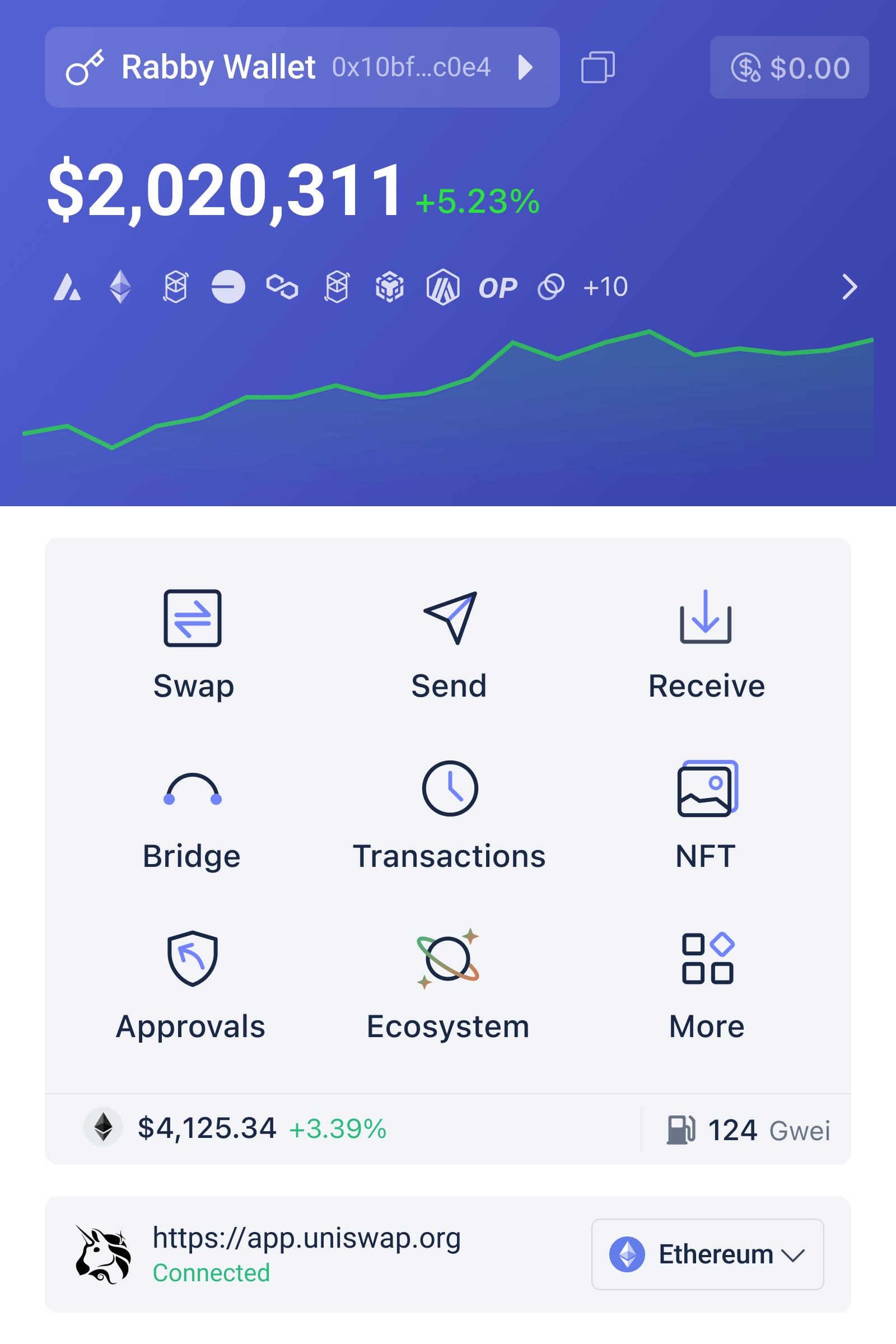
This framework also clarifies the role of a browser wallet. Rabby is designed for Ethereum and EVM-compatible networks, and its recent positioning emphasizes use across that broader ecosystem rather than a single chain. For a user who wants to install the extension, obtaining the rabby extension download through a trusted source is only the beginning. The safer workflow is to verify the extension’s origin, confirm the correct network, inspect the connected site, review the transaction simulation, and approve only the permissions and values that match the intended action.
What simulation warnings should change in practice
A warning that a transaction may fail deserves a different response from a warning about an unfamiliar contract or token approval. Failure warnings often point toward stale quotes, insufficient balance, incorrect parameters, expired signatures, or changing protocol conditions. The sensible response may be to refresh the quote, reduce the transaction size, increase slippage only when the market justifies it, or stop and investigate.
Approval warnings require a separate discipline. A token approval authorizes a contract to spend a specified amount of a token on the user’s behalf. An unlimited approval can be convenient because it avoids repeated approval transactions, but it also creates a larger exposure if the contract or integration is compromised. A simulation may display the approval clearly, yet the user still has to decide whether convenience is worth the additional permission. For active DeFi participants, periodically reviewing and revoking unnecessary allowances can be more consequential than shaving a small amount from a gas quote.
Users should also distinguish a transaction that is technically successful from one that is economically acceptable. A swap can execute while delivering fewer tokens than expected within the permitted slippage range. A liquidity transaction can succeed while exposing the user to impermanent loss, smart-contract risk, or changes in reward incentives. Simulation describes execution behavior; it does not turn a risky financial position into a safe one.
A practical installation and confirmation workflow
After installing a wallet extension, begin with a small-value transaction on the intended network rather than immediately connecting to a complex DeFi application. Check that the network name, account address, and asset balance are correct. When a site requests a connection, ask whether the site needs only account visibility or is preparing an approval and contract interaction.
Before signing, read the simulation as a set of state changes, not as a traffic-light score. Look for the assets leaving the wallet, the assets expected to arrive, approvals being granted, contract addresses involved, and any warning about a likely revert. Compare the displayed result with the action you initiated. If you intended to swap one token for another but the transaction includes an unexpected approval, permit, or transfer, pause.
For gas management, avoid copying fee settings from an unrelated transaction. Network conditions vary by chain and by time. A high priority fee may improve inclusion speed but does not repair a bad transaction. A low fee may reduce urgency but can leave a quote or deadline exposed to changing market conditions. The appropriate setting depends on the transaction’s deadline, the chain’s fee market, and the cost of delay.
Finally, treat simulation as one layer in a broader control system. Use a separate account for experimentation, keep meaningful funds away from unfamiliar applications, and verify contract interactions independently when the value is material. Hardware signing can protect private keys, but it cannot make an approved malicious transaction harmless. Wallet interfaces improve visibility; they do not remove the need for judgment.
What to watch next
The practical importance of transaction simulation is likely to increase if DeFi applications continue to span many EVM networks and compose more contract calls behind simple interfaces. In that scenario, the user-facing wallet becomes an interpretation layer between complex execution and a human signature. The key question will not be whether simulation exists, but how accurately it communicates uncertainty, distinguishes benign complexity from suspicious behavior, and updates as blockchain state changes.
That future remains conditional. Better simulation cannot solve private-ordering issues, hidden contract logic, compromised front ends, thin liquidity, or economic losses caused by market movement. Its strongest contribution is narrower and more dependable: it can make the proposed transaction more legible before the user commits. For DeFi users, that is already a meaningful form of risk reduction.
Frequently asked questions
Does transaction simulation guarantee that my DeFi transaction is safe?
No. It can identify likely execution results, suspicious state changes, or probable failures under tested conditions. It cannot guarantee that a contract is honest, that a token has value, that market prices will remain stable, or that the blockchain state will not change before confirmation.
Can Rabby simulation reduce my gas fees?
It may reduce wasted gas by helping you avoid transactions likely to revert and by making unnecessary approvals or complex interactions easier to notice. It does not guarantee the lowest fee, and reducing gas settings too aggressively can cause failure. Total transaction cost also includes slippage and protocol fees.
What should I do if a simulation shows an unexpected approval?
Do not sign automatically. Confirm which contract is receiving the allowance, whether the approval is required for the action, and whether the amount is limited or unlimited. If the request does not match your intention, disconnect from the site and investigate before proceeding.